Practice 6: Manage Your Time and Energy

Free Guide
From Burnout to Breakthrough

The leadership practices that balance high expectations with genuine care to sustain performance.

Download Now Image
Free Guide
Crucial Insights For Leaders

Leading a team requires a different skillset than working as an individual contributor.

Download Now download icon

Make time for priorities.

As individuals progress on their leadership track, the must decide how they’re going to work, balance their life, and renew themselves. By establishing effective patterns now, it will serve them in the long term. Effective leaders resist the natural temptation to neglect their health, professional development, or personal life. Great leaders identify their needs, make time for their priorities, and model this behavior for their team.

To effectively manage their time and energy, leaders need to shift their mindset from ‘I am too busy to take time for myself’ to ‘I must manage my time and energy to be an effective leader.’

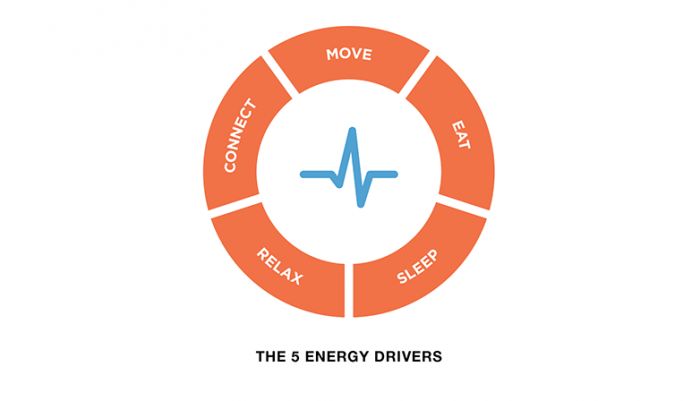
The 5 Energy Drivers

One crucial aspect of effective 1-on-1s is a system of shared accountability. This system establishes collective ownership, models transparency, aligns mutual expectations, and improves problem solving—ensuring that both parties are equally invested in attending, participating, and establishing next steps to maintain momentum.

The 5 Energy Drivers Expanded

Sleep

  • Understand how vital sleep is to your overall health, specifically your brain health.
  • Create space between your active, full-on day and your bedtime. Find a routine that works for you.
  • Relaxing activities and routines, such as evening yoga and meditation, can also aid sleep.

Relax

  • Don’t confuse relaxation with numbness.
  • Take mental mini-breaks throughout the day.
  • Be proactive about scheduling a longer mental break.

Connect

  • Volunteer by giving back to your community or to those in need.
  • Invest in your social network or reach out to someone in need.
  • Create special moments to celebrate with friends, family, or peers.

Move

  • Treat exercise as a luxury—it is something you get to do as opposed to have to do.
  • Think outside the gym exercise doesn’t always require equipment.
  • Find your people, like a training partner or accountability buddy to increase the likelihood you will exercise.

Eat

  • Remember the main purpose of eating is to fuel yourself with energy, not just to satisfy hunger.
  • Inventory your food choices last week. Tracking choices will help you make better ones.
  • Prepare for your post work hunger. When you have healthy snacks ready, they are easier to choose.
Image

How do I become a highly effective manager? To answer that question, let’s climb out of the crevices of the ‘day-to-day’ so we can see things from a mountaintop perspective—to challenge the mindset that is bringing us the results of today so we may get superb results tomorrow.

Dr. Stephen R. Covey
Practice 1
Develop a Leader’s Mindset

Leading a team requires a different mindset than working as an individual contributor. Explore the critical mindset shifts that will maximize success as a leader of others.

Practice 2
Hold Regular 1-on-1s

Increase engagement of team members by conducting regular 1-on-1s, deepen your understanding of team member issues, and help them solve problems for themselves.

Practice 3
Set up Your Team to Get Results

Create clarity about team goals and results; delegate responsibility to team members while providing the right level of support.

Practice 4
Create a Culture of Feedback

Give feedback to develop team member confidence and competence; improve your own performance by seeking feedback from others.

Practice 5
Lead Your Team Through Change

Identify specific actions to help team members navigate and accelerate through change and achieve better performance.

Practice 6
Manage Your Time and Energy

Use weekly planning to focus on the most important priorities, and strengthen your ability to be an effective leader by applying the 5 Energy Drivers.

Engage with us.